Fine motor skills are the small, precise movements your toddler makes with their fingers, hands and wrists. Picking up a piece of banana, turning a page, scribbling with a crayon and zipping a jacket all rely on them. Fine motor activities for toddlers are simple play ideas that build these skills, and most use things you already have at home.
Strong, controlled hands take years to develop. The aim at this age isn’t neat writing. It is plenty of chances to grasp, pinch, squeeze, pour and poke, so the muscles and coordination build up before pencils come along.
Everyday tasks depend on fine motor control: feeding yourself, dressing, brushing teeth, drawing and later writing. Children who have had lots of practice with their hands usually find these tasks less frustrating. Fine motor play also builds hand-eye coordination, concentration and persistence, because most of these activities take a few tries to get right.
Cut a hole in the lid of a container and let your toddler post in large pom poms, wooden blocks or milk bottle lids. Choose items too big to swallow. It builds grasp and release, and hand-eye coordination. Good from around 12 months.
Clip pegs around the rim of a plastic tub or card box. Squeezing and clipping builds the pinch grip used for holding a pencil. Start with large, easy-grip pegs from around 18 months.
Thread large wooden beads or cut straws onto a shoelace or pipe cleaner. Use big pieces and stay close, because small beads are a choking risk. Tying a knot at one end stops the beads sliding off. Best from around 2 years.
Let your toddler tear old magazines, scrunch tissue paper into balls, or rip paper strips for a collage. It builds hand strength and both hands working together.
Give your toddler a bowl of dry pasta or oats, a scoop and a few cups. Moving things from one container to another builds wrist control. Add a tray to catch spills and stay close if your toddler still puts things in their mouth.
Use child-safe tongs or large tweezers to pick up pom poms or cotton balls and move them to a muffin tin. It builds the finger control needed for writing. Try it from around 2 and a half to 3 years.
Peeling stickers off a sheet and sticking them down uses a pinch grip and careful control. Let your toddler decide where each one goes.
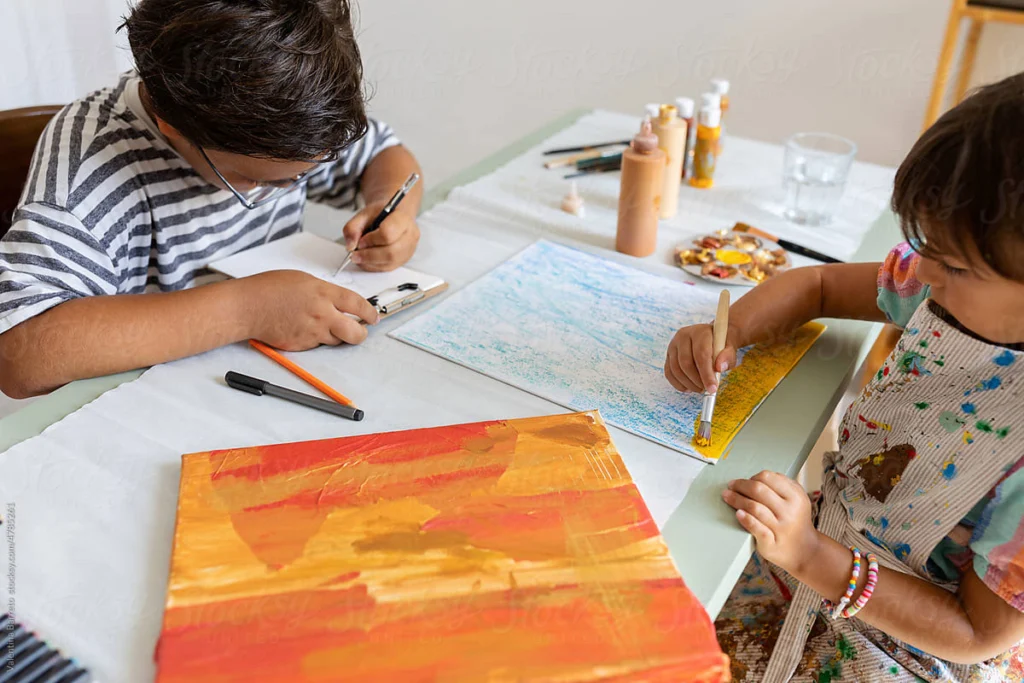
Offer thick crayons and large sheets of paper, or tape paper to a table so it doesn’t slide. Scribbles are an important first step. Try drawing on a vertical surface, such as paper taped to a wall, to build shoulder and wrist strength.
Stack blocks, cups or small boxes into towers. Building and knocking down towers builds hand-eye coordination and the controlled release needed for later skills.
Chunky wooden puzzles with knobs help your toddler practise picking things up with a pinch grip and fitting shapes into spaces.
Squeezing a spray bottle or a wet sponge builds hand strength. Use it outdoors to “wash” a fence, or give your toddler a small container of water and a paintbrush to paint on the pavement.
Let your toddler practise with big buttons, zips and velcro on a spare jacket or a doll’s clothes. Dressing skills build slowly, so let them take their time.
Playdough, finger painting and other messy textures also build hand strength. You’ll find more ideas in our guide to sensory play for babies and toddlers, and big movements are covered in our post on gross motor activities for toddlers.
Educators in early learning centres build fine motor opportunities into everyday play: threading, drawing, building, pouring at the water table and handling tools in the sandpit. You can read how play fits into our programs on our curriculum page.
Children develop at different rates, and a wide range is normal. If you are worried that your toddler isn’t using both hands, can’t pick up small objects, or seems to be losing skills they once had, talk to your child and family health nurse or GP.
Fine motor skills are small movements of the fingers, hands and wrists, such as grasping a spoon, turning pages and scribbling.
They develop gradually from babyhood and keep developing through the early school years. Toddlers typically move from grasping with the whole hand to using their fingers more precisely.
Offer a wide range of fine motor play first. Pinching, squeezing and scooping build the hand strength a pencil grip depends on. Start with chunky crayons and let your toddler choose how to hold them.
Many children show a hand preference between about 2 and 4 years of age, though some switch for a while. If you are unsure, ask your child and family health nurse.
