Gross motor skills are the big movements of the body: walking, running, jumping, climbing, throwing and balancing. Gross motor activities for toddlers are simple games that give them lots of chances to practise these movements, indoors on a wet day or outside in the backyard and park.
Toddlers don’t need equipment or a plan. They need space, time and an adult who lets them move.
Raising Children Network reports that Australian guidelines say toddlers should be active for at least 3 hours every day. That time includes walking, running, jumping and climbing, as well as quieter movement such as building with blocks. It doesn’t need to happen in one go, and it adds up through the day.
Long stretches in prams, strollers and car seats limit movement. Where it’s safe, let your toddler walk, push a toy or ride a scooter instead.
Raising Children Network suggests ride-on toys from 12 months. Scooters, balance bikes and tricycles suit around 2 to 3 years, or earlier if your toddler shows an interest.
Parks, backyards and beaches offer hills, sand and uneven ground. Walking and running on different surfaces builds balance and leg strength.
Climbing, sliding and balancing on playground equipment builds strength and confidence. Stay close and supervise. Small bumps and falls are a normal part of learning to move.
Roll a ball back and forth, kick it, or throw it into a laundry basket. Ball games build hand-eye coordination and teach turn taking.
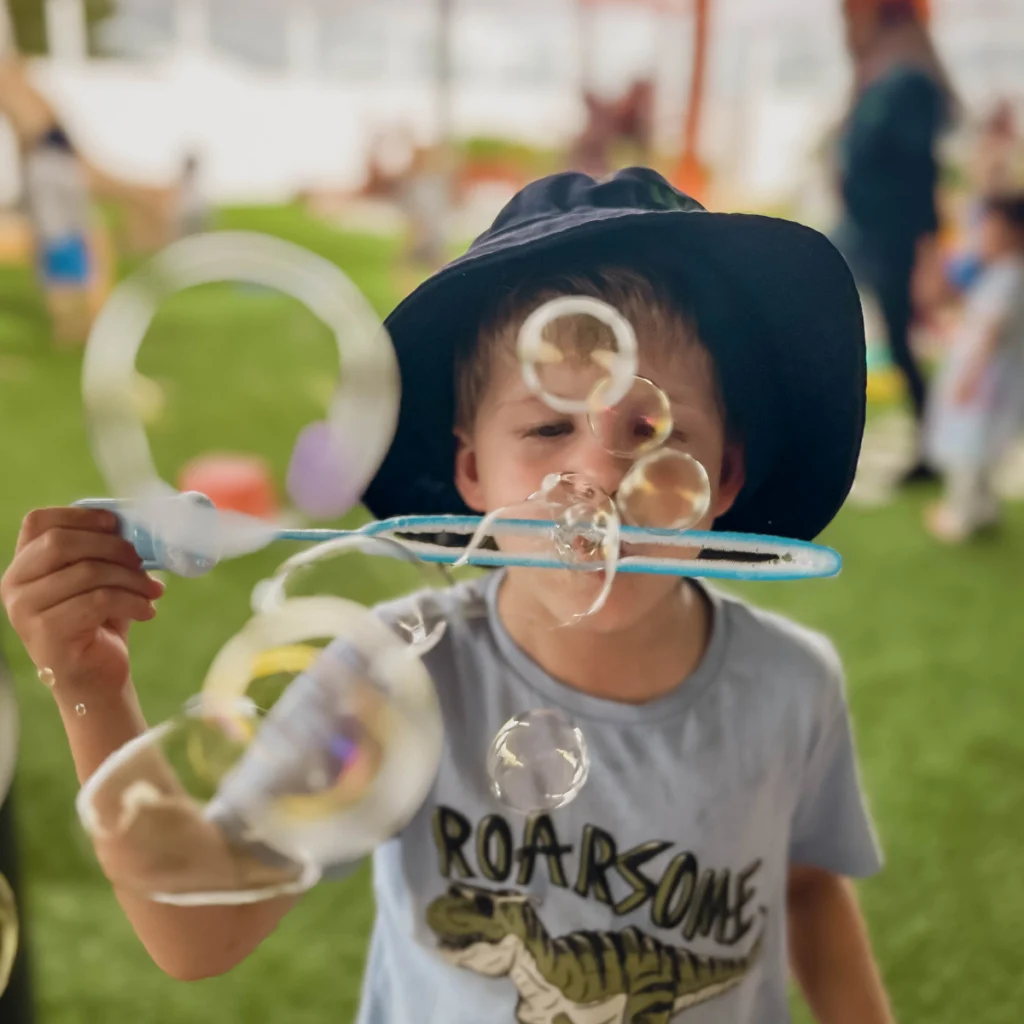
Blow bubbles and let your toddler run, pop and stomp. It builds speed, balance and the ability to change direction.
Put on music and dance with scarves, ribbons or homemade shakers. Add action songs with movements for your toddler to copy, such as stomping, spinning and jumping.
Line up cushions to climb over, a blanket to crawl under and a line of tape on the floor to walk along. Keep it low and soft, and stay close.
Waddle like a duck, hop like a frog, stomp like an elephant or crawl like a bear. It builds balance, coordination and imaginative play.
Throw soft bean bags or rolled-up socks into a bucket or laundry basket. Move the target further away as your toddler’s aim improves.
Keep a balloon in the air by tapping it. Balloons float slowly, which gives toddlers more time to reach and react. Pick up any burst pieces straight away, as they’re a choking hazard.
Pile pillows and cushions in a safe spot and let your toddler climb, crawl and tumble. Check that nothing hard is nearby.
Early learning centres plan for active play every day, with outdoor space for running, climbing and balancing. Our philosophy page covers how we think about nature play, and our curriculum page explains how play fits into our programs.
For activities that build hand and finger control, see our post on fine motor activities for toddlers.
Children reach movement milestones at different times. According to Raising Children Network, if your child isn’t running smoothly by 3 years or shows little interest in active exploration, talk to your child and family health nurse or GP, who may suggest a paediatric physiotherapist.
Gross motor skills use the large muscles of the body for movements like walking, running, jumping, climbing and throwing.
Give them daily chances to move: walking, running, climbing, dancing and playing ball games, both indoors and outdoors.
Dancing, kicking and rolling a ball, climbing on playground equipment, walking on different surfaces, scooters or balance bikes, and obstacle courses with cushions.
Small bumps and falls are normal. Supervise, make the space safe, and let your toddler test their limits within reason.
